
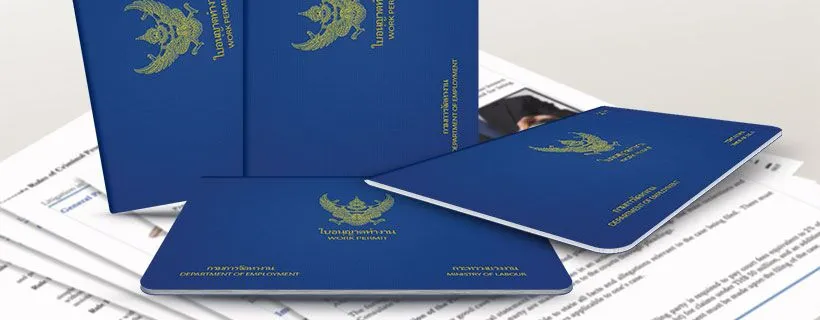
A Thai work permit is a mandatory legal authorization required for most foreign nationals who intend to work, manage a business, provide services, or perform professional duties in Thailand. Thailand maintains a regulated employment framework to protect local labor markets and ensure that foreign employment is properly controlled and documented. As a result, work permit compliance is strictly enforced by labor authorities, and violations can result in severe penalties for both the foreign employee and the sponsoring employer.
Foreign nationals frequently misunderstand Thai work authorization rules, especially those who enter Thailand using tourist visas, education visas, or long-stay visas such as retirement visas. While these visas may allow lawful residence, they do not grant automatic permission to work. Even individuals performing unpaid consulting, managing a Thai company, or conducting business operations on behalf of a foreign employer may be considered “working” under Thai law.
This article provides a detailed legal and practical explanation of Thai work permits, including the legal framework, eligibility criteria, employer qualifications, application and renewal procedures, job restrictions, and enforcement risks.
Legal Framework Governing Thai Work Permits
Thai work permits are governed primarily by the Alien Employment Act, which regulates:
- the definition of work
- eligibility standards for foreign employment
- restricted occupations reserved for Thai nationals
- employer sponsorship requirements
- penalties for illegal employment
Work permits are issued by the Department of Employment Thailand, under the Ministry of Labour Thailand.
Immigration status is separately regulated by the Thai Immigration Bureau, meaning foreigners must maintain lawful visa status while holding a work permit. A work permit alone does not legalize stay in Thailand unless paired with the appropriate visa.
What Is Considered “Work” in Thailand?
Thailand applies a broad definition of work. A foreigner may be considered working if they perform any activity involving physical effort, professional skills, intellectual services, or management responsibilities.
Common examples of work include:
- office employment and administrative duties
- teaching or training
- consulting services
- technical installation and engineering work
- managing employees or supervising business operations
- performing marketing or sales functions
- participating in business negotiations
- signing company documents as an active director
A key legal principle is that work does not require salary. A foreigner may still be violating Thai law even if they receive no compensation or are paid abroad.
This is why foreign nationals staying in Thailand long-term must carefully evaluate whether their activities require work authorization.
Work Permit vs. Visa: Understanding the Legal Relationship
A work permit is separate from a visa. The visa provides permission to enter and remain in Thailand, while the work permit provides permission to work.
In most cases, a foreigner must hold a:
- Non-Immigrant “B” Visa (Business Visa)
Once the foreigner enters Thailand, the typical compliance pathway is:
- enter Thailand on a Non-Immigrant B visa
- apply for a Thai work permit
- obtain the work permit approval
- apply for a one-year extension of stay based on employment
- renew work permit and visa extension annually
If the foreigner does not maintain the correct visa status, the work permit may be canceled or may not be issued.
Who Must Obtain a Work Permit?
Most foreigners who work in Thailand must obtain a work permit, including:
- employees of Thai companies
- foreign directors performing operational roles
- foreign technicians providing services in Thailand
- foreign teachers and academic staff
- consultants and professional service providers
- foreign staff assigned by multinational companies
- employees of representative offices and branch offices
Certain categories of foreigners may qualify for special exemptions, but these are limited and must be confirmed case-by-case.
Employer Qualifications and Sponsorship Requirements
A foreign work permit application depends heavily on the sponsoring employer. Thai authorities assess whether the company is legally qualified and financially capable of employing foreigners.
1. Registered Capital Requirements
A common standard requirement is:
- THB 2 million registered capital per foreign work permit
This requirement may vary depending on the industry, location, or special privileges (such as BOI promotion).
2. Thai Employee Ratio
Many companies are expected to maintain a ratio of:
- 4 Thai employees per 1 foreign employee
This is commonly verified through the Social Security Office.
3. Tax and Corporate Compliance
The company must demonstrate active and legitimate business operations, usually by providing:
- corporate registration documents
- VAT registration and filings (if applicable)
- corporate income tax filings
- withholding tax records
- audited financial statements
- office lease agreement and business address proof
- photos of the business premises
Shell companies or inactive businesses often fail to meet sponsorship requirements.
Foreign Employee Qualification Requirements
Thai authorities evaluate whether the foreign employee is genuinely qualified for the position. Applicants often must provide:
- university degree or professional qualifications
- resume and employment history
- reference letters confirming work experience
- job description matching the applicant’s skills
Certain industries require additional licensing or professional registration, especially in regulated fields such as engineering or healthcare.
Restricted Occupations Reserved for Thai Nationals
Thailand maintains lists of occupations prohibited to foreigners. These restrictions are intended to protect Thai workers and limit foreign participation in certain sectors.
Common restricted occupations include:
- manual labor and construction labor
- agriculture-related work
- street vending and small-scale retail trade
- tour guide services
- traditional Thai massage
- hairdressing and beauty services
- certain craft and artisan occupations
Foreigners cannot legally obtain a work permit for restricted occupations, regardless of employer sponsorship.
Work Permit Application Procedure
Step 1: Company Document Preparation
The employer must prepare key corporate documents, including:
- company affidavit and registration certificate
- shareholder list
- VAT certificate (if applicable)
- tax filings and financial statements
- Social Security employee records
- office lease and company location map
- director’s identification documents
All corporate documents must be signed and stamped.
Step 2: Employee Document Preparation
The foreign applicant typically must submit:
- passport and visa copy
- recent photographs
- medical certificate issued in Thailand
- educational certificates and transcripts
- resume/CV
- employment contract
- reference letters confirming experience
Documents issued abroad may require legalization and Thai translation.
Step 3: Submission to the Department of Employment
The application is filed with the Department of Employment in the relevant province. Processing time varies depending on workload and business category.
Once approved, the work permit is issued and recorded.
Scope of Work Permit and Legal Restrictions
A Thai work permit is not flexible. It clearly defines:
- employer name
- job title
- job duties
- work location
Foreigners may not legally work outside the permitted scope.
Common violations include:
- working for another company without authorization
- performing duties not listed in the permit
- working at a different branch office
- providing services to clients outside the approved work location
If the foreigner’s role changes, the work permit must be amended.
Renewal and Extension Requirements
Work permits are commonly issued for one year and renewed annually. Renewal requires proof of continued compliance, including:
- salary payment evidence
- withholding tax filings
- Social Security contributions
- updated company financial statements
- ongoing Thai employee ratio compliance
- valid visa extension status
A company that fails to maintain compliance may lose its ability to renew foreign work permits.
Cancellation and Job Termination
If the foreigner resigns or is terminated, the work permit must be canceled. The employer is generally responsible for notifying the Department of Employment.
Once canceled, the foreigner may need to:
- leave Thailand, or
- change visa status within the permitted time period
Failure to cancel properly can create legal exposure and affect future work permit applications.
Penalties for Working Without a Work Permit
Penalties for Foreigners
Foreigners working illegally may face:
- fines
- imprisonment
- deportation
- blacklisting and re-entry bans
Penalties for Employers
Employers hiring foreigners illegally may face:
- substantial fines per foreign worker
- criminal liability
- possible business suspension
Enforcement can occur through inspections, immigration checks, and labor investigations.
BOI Work Permit Privileges
Companies promoted by the Thailand Board of Investment (BOI) often receive streamlined work permit privileges, including:
- faster processing through One Stop Service Centers
- simplified documentation requirements
- increased flexibility in employing foreign specialists
This is particularly beneficial for foreign investment projects in manufacturing, technology, and export-related industries.
Conclusion
A Thai work permit is a legal requirement for most foreign nationals performing any form of work or professional service in Thailand. It is regulated under the Alien Employment Act and administered by the Department of Employment, while immigration compliance is controlled separately by the Immigration Bureau. A work permit must be supported by a valid visa, and both the foreign worker and employer must maintain ongoing compliance.
Because work permits are employer-specific, duty-specific, and location-specific, foreigners must ensure that their actual activities match the approved scope of work. Employers must maintain adequate registered capital, Thai employee ratios, and tax compliance to qualify for sponsorship and renewals.
For foreign professionals and businesses operating in Thailand, a properly issued and maintained work permit is essential for lawful employment, long-term stability, and protection against legal penalties.